Contact Us
Get in touch to talk with us

Our Clientele - Family Offices, Corporates, NRI, UHNI, FPI
Since 1993
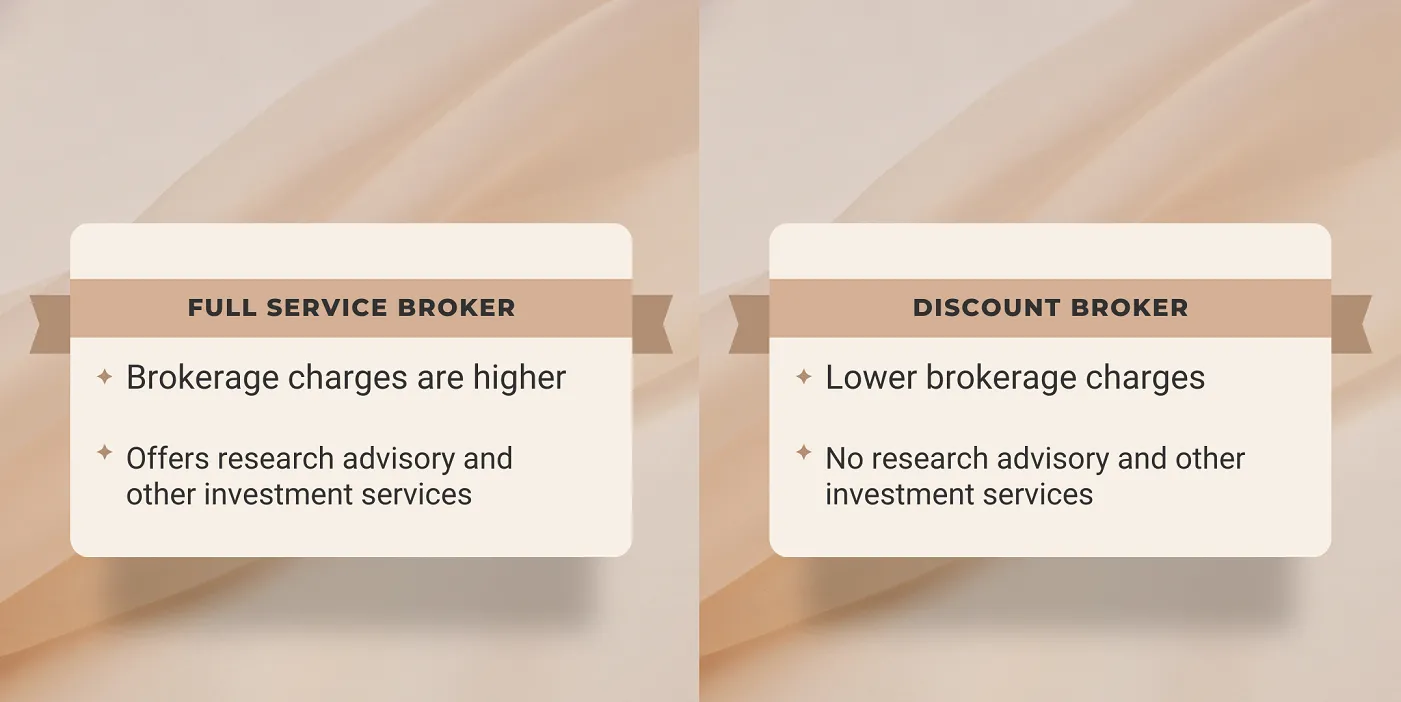
Today, we'll talk about one of the trendiest topics in the investing world: Full-service vs bargain brokers: which should you choose? Let's define a stockbroker so we can proceed. Who is an investment broker? A stockbroker is a person or organisation that has registered as a stock exchange member and has been granted permission to act on behalf of its clients in the securities market. On behalf of their clients, stockbrokers can directly purchase and sell equities on the stock market for a commission. There are now two categories of stock brokers in India: Let's examine each classification of stockbrokers: - Traditional (Full-Service) Brokers Traditional brokers offer trading, research, and consulting services for currencies, commodities, and equities. These brokers charge commissions as a percentage of each deal made on their client's behalf. They also make investing in insurance, bonds, FDs, mutual funds, forex, and IPOs easier. -Budget Brokers (Discount Brokers) Discount brokers merely offer their clients the ability to trade. For 'do-it-yourself' clients, they do not provide advice services or legal representation. For trading in stocks, commodities, and currency derivatives, they provide low brokerage, quick execution, and a good platform. Discount brokers versus full-service brokers: According to various criteria, the following are the main distinctions between full-service and cheap brokers: - Which one should you pick? Your expertise, preference, and time all affect the answer. A full-time broker is the best option if you want stock advisory services for your investment. On the other hand, you should pick a bargain broker if you wish to conduct your research or if you have a financial counsellor. - Before choosing your stockbroker, you should also carefully evaluate brokerage fees. - Choosing a discount broker would help because you will save a lot of money on brokerage fees. A full-service broker was where we initially started. However, we soon realised that it could have been more pricey when compared to discount brokers. In addition, I wasn't using the full-service broker`s advisory facility. Therefore, even though I could receive comparable benefits from the less expensive stockbrokers, paying more brokerage fees didn't make sense.After that, I changed from a full-service broker to a discount broker. Per executed order, discount brokers impose a fee of 0.01% or Rs 20 (whichever is less). Compared to (a full-service broker), who charges a fee of 0.5% on each transaction, this is far less expensive. In contrast, a discount broker will only charge you Rs 20, a difference of Rs 230, if you purchase stocks for Rs 50,000 through full services broker. Furthermore, since this fee is imposed on both sides of the transaction (buying and selling), you must pay Rs 500 for the entire transaction. This is considered too expensive compared to a total brokerage fee of Rs 40 on both sides of transactions with a discount broker. Conclusion I recommend picking discount brokers if you are new to investing and want to start a trading account to save a lot on brokerage fees. However, when choosing a stockbroker, your knowledge, preference, and time ultimately count the most. You should use a discount broker if you have the necessary knowledge and time to conduct thorough stock research and would like to avoid paying an additional commission. On the other hand, you can choose a full-service broker if you don't mind paying an additional commission for the advising services to save time and make better financial decisions.
Get in touch to talk with us